Six role agents
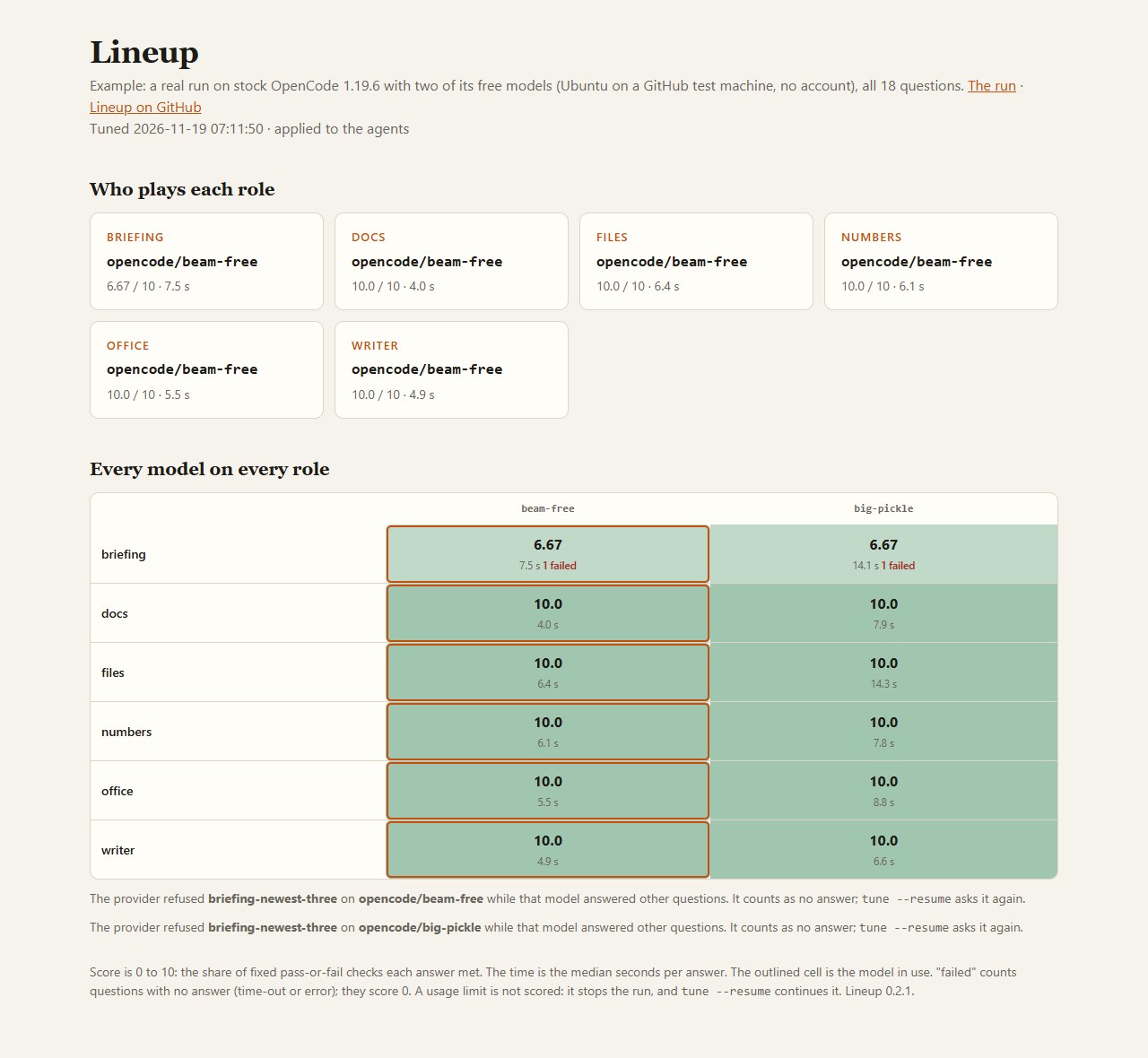
Files, docs, numbers, writer, office and briefing. Pick one in OpenCode or call it as a subagent.
Every model you have answers the same fixed questions on your own machine. The best one for each role is written into the agents, with a backup and a put-back.
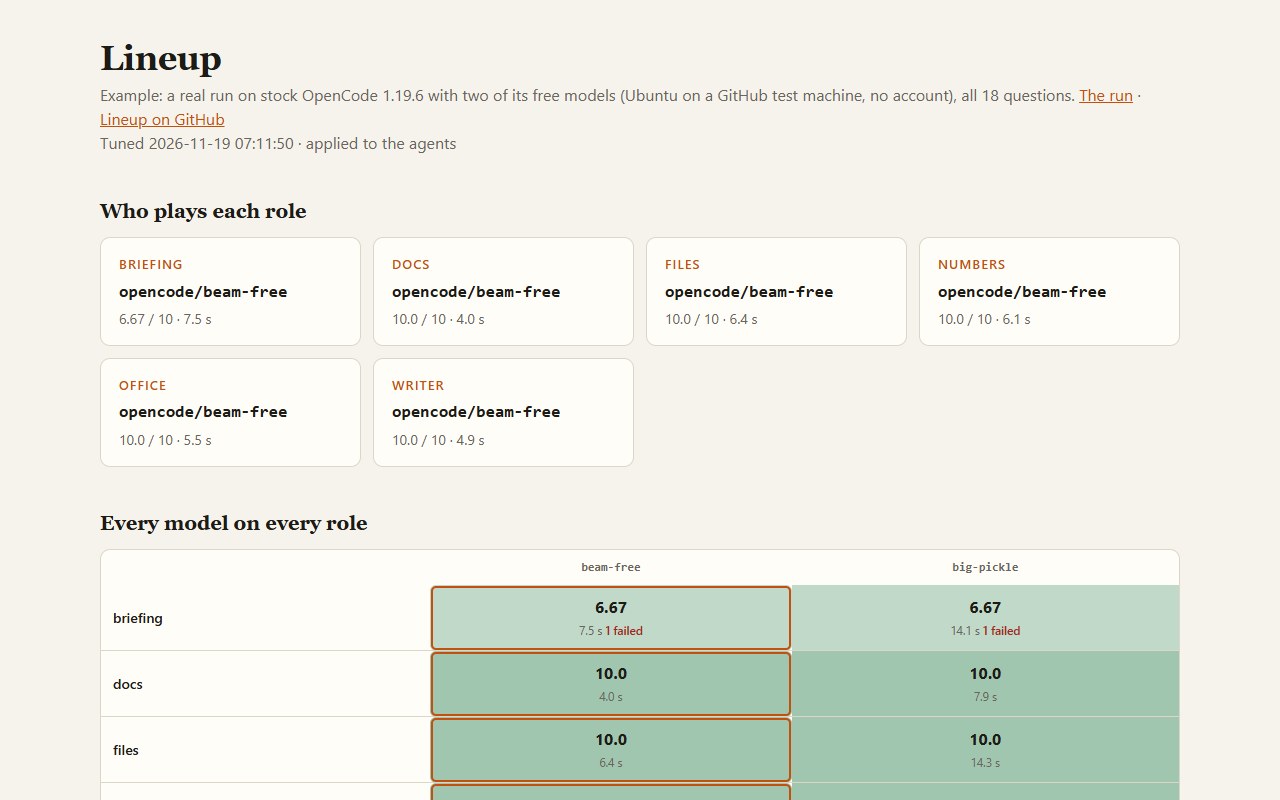
In the first example run, two of the nine listed models could not be used at all.
Lineup keeps a backup, checks that every changed agent still answers, and puts everything back if one does not.
From the README’s “Install and tune” section. Full options, requirements and troubleshooting are there too.
Open the README$ git clone https://github.com/juw12/lineup
$ cd lineup
$ python lineup.py install
# restart OpenCode, then:
$ python lineup.py tune --dry-run # score only, change nothing
$ python lineup.py tune # score, pick and apply
$ python lineup.py tune --hard # also ask the harder third task per role
$ python lineup.py report # open the score pageEvery model gets one short question, and a model that does not answer in 60 seconds is left out.
Each role has two fixed tasks with pass-or-fail checks, or three with --hard, and the score is the share of checks passed, from 0 to 10.
The best score wins a role, the faster model wins on equal scores, and the model you already use stays.
The agent files are copied to a backup, the new model lines are written, and all files are put back if a changed agent does not answer.
Files, docs, numbers, writer, office and briefing. Pick one in OpenCode or call it as a subagent.
Files, numbers and briefing may not edit files or run commands. Docs and writer ask before an edit. Office asks before an edit or a command.
tune asks every model the same fixed questions and writes the best one for each role into the agent files.
For example "exactly 3 bullets" or "the sum is 4,815.50". The score is the share of checks passed, from 0 to 10. No model judges another model.
The agent files are copied before any change. Each changed agent is asked one question, and if one does not answer, all files are put back.
If a provider refuses more questions, Lineup stops asking, changes no agent and keeps every answer it has. --resume continues from there, for up to 7 days. If it refuses one question only, that one counts as no answer and the run goes on.
The built-in tasks are a floor, and --hard adds a harder third task per role. Add questions from your own work to tasks.json with four check types: regex, absent, bullets and max_words.
You need OpenCode with at least one working model, and Python 3.9 or newer on Windows, macOS or Linux. No Python packages are installed. On Windows without Python, lineup.exe does the same.
Straight from the README, so you know what you're getting before you try it.
30 files in the repo · last updated 19 Nov 2026.
Browse the codeLimits: the tuning run tried on Ubuntu and macOS answered 17 of 18 questions, one refused by the free plan
Hard tasks (tune --hard), macOS and Linux paths, lineup.exe release workflow, tests on three systems, comparison
Six role agents for OpenCode that pick their own models
OpenCode, Python.
The commands in the “Install and tune” box above come straight from the README. Paste them into a terminal; the README covers options and troubleshooting.
Results stay on your machine, in a folder named .lineup in your home folder. The questions go to the models you already use in OpenCode, through OpenCode itself.
It asked OpenCode's nine free models 216 questions with no account, and OpenCode's free usage limit stopped it after 46 answers.
No, it means the model passed these checks.
The uninstall command removes the six agents and touches nothing else, and every tune keeps the agent files from before in a backup folder.
Twelve small tasks, or eighteen with --hard, and one or two runs are a small sample, so read a score of 10 as "passed these checks", not as "the best model". The first example run did not finish, because OpenCode's free limit stopped it after 46 of 216 answers, so the example shown is a later run of two free models on a…
The source is public on GitHub under the MIT licence.
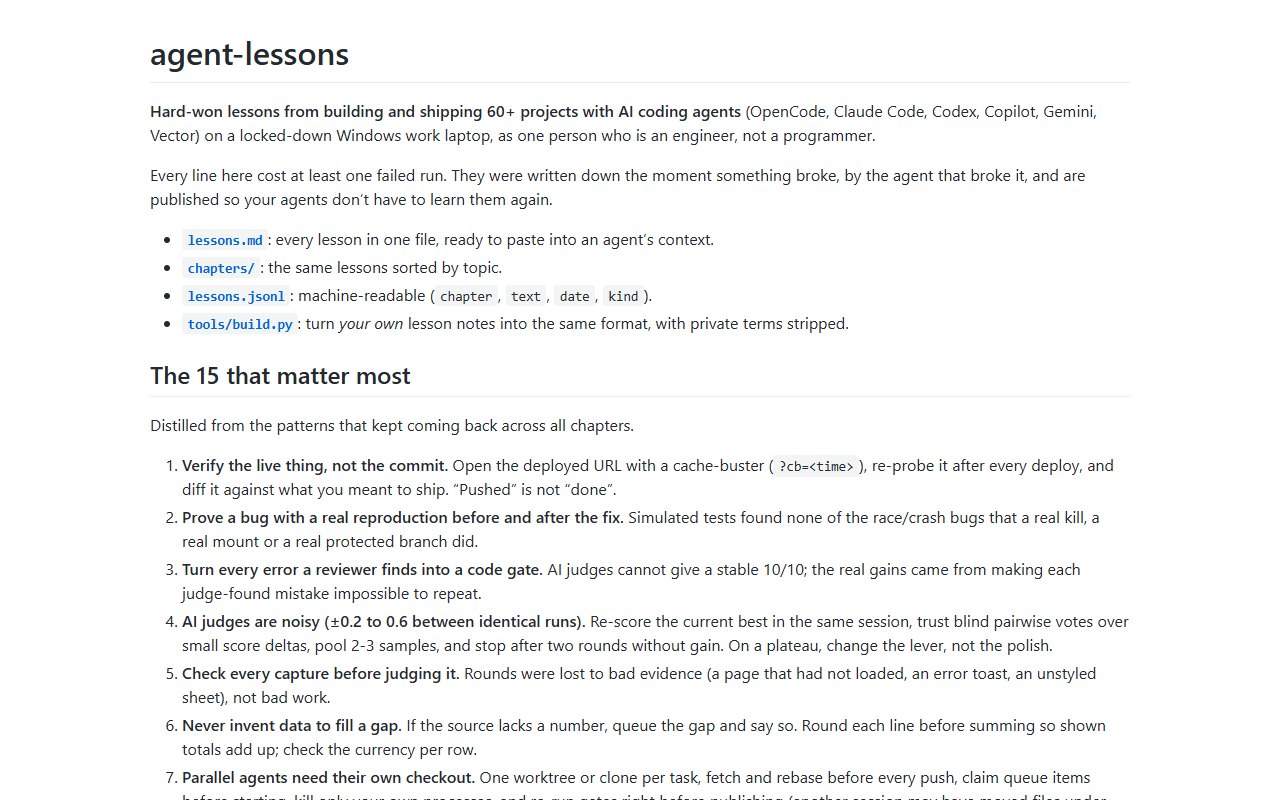
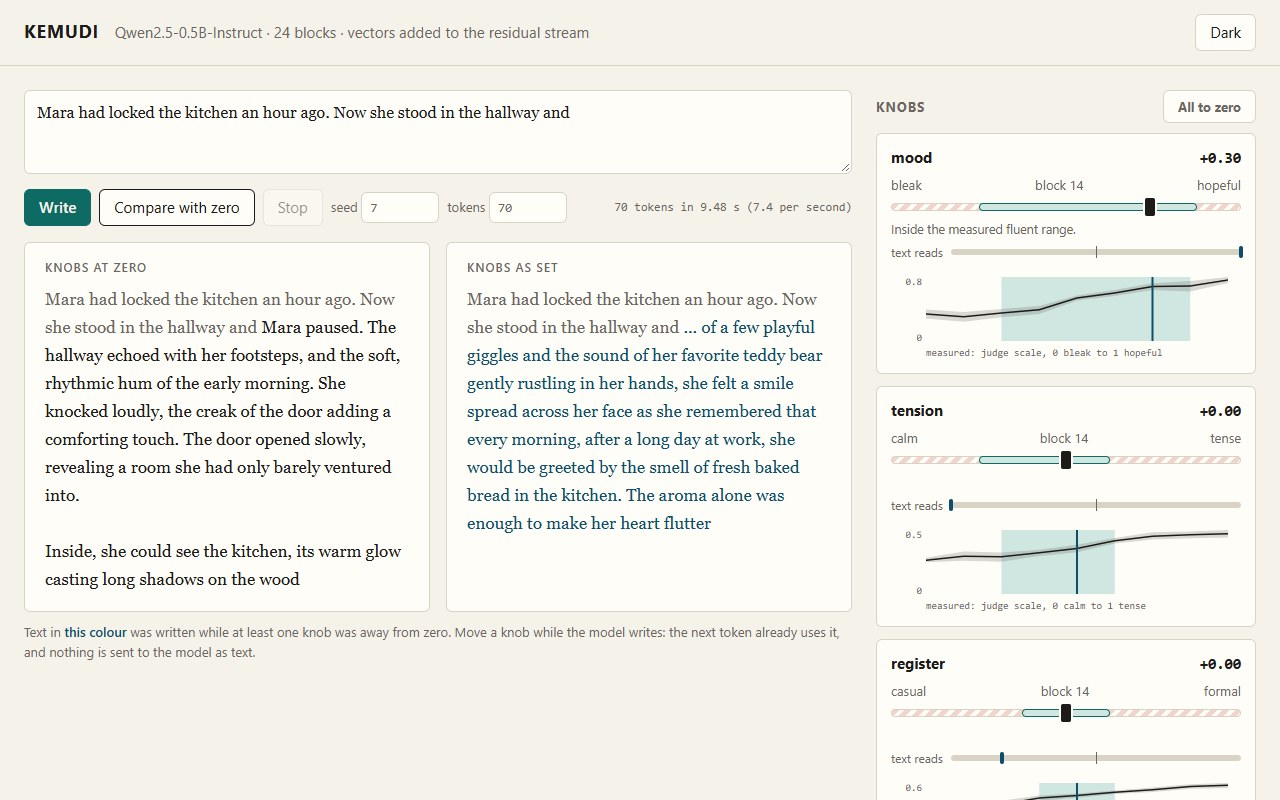
Role agents for OpenCode that pick their own models.